
The ceremony for the signing of the renewal of the Cooperation Agreement between the CNR and the Japan Society for the Promotion of Science (JSPS) was held on September 18, 2025, in Tokyo, at the residence of the Italian Ambassador Gianluigi Benedetti. With this renewal, the National Research Council has once again taken significant steps to intensify and internationalize Italian research, consolidating the collaboration with important scientific institutions in Japan. The agreement was signed by the Director of the Department of Chemical Sciences and Materials Technology, Lidia Armelao, representing the CNR President Andrea Lenzi. Among those present were also the Director of the Department of Earth System Science and Environmental Technologies, Francesco Petracchini, and the CNR’s International Relations Office, as well as the Director of IRBIM, Gian Marco Luna. The Scientific Attaché and Ambassador Benedetti opened the ceremony, praising the agreement as an effective tool for promoting research exchanges between our countries and opening new perspectives for the future. Director Armelao recalled how the partnership between CNR and JSPS is a ‘reference partnership,’ founded on crucial values such as mutual respect and the training of young researchers. This appreciation was reiterated by the President of JSPS, Tsuyoshi Sugino, who expressed the hope that the collaboration can further expand in the future. Further solidifying the Italian presence and commitment, another significant bilateral agreement was finalized on the occasion of EXPO 2025 in OSAKA: the one between the CNR and JAMSTEC (Japan Agency for Marine-Earth Science and Technology). The agreement for Italy was signed by the Department Director DSSTTA Francesco Petracchini, sealing an important collaboration in the scientific sector. These recent successes testify to the CNR’s constant commitment to the internationalization of research and the support and full participation of IRBIM in these activities.
Author: Manuela Coci
Osaka Expo 2025 – CNR Day
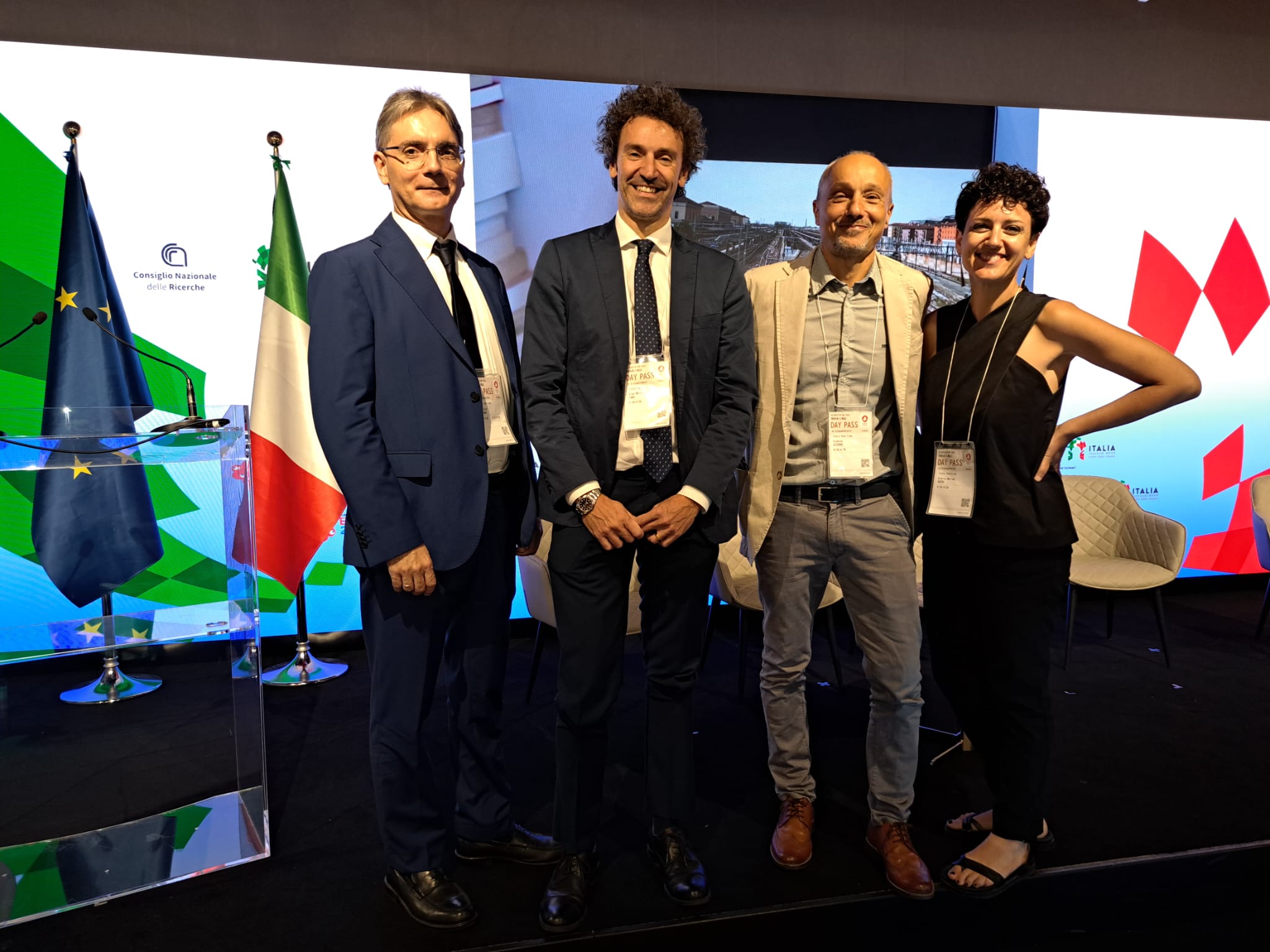
19 September 2025, Osaka. The Italian Pavilion at Expo 2025 Osaka “Designing Future Society for Our Lives” hosted the “CNR Day: – Knowledge as the Key to Protection,” a high-profile event organized by the National Research Council (CNR), through the Department of Earth System Science and Technology for the Environment (CNR-DSSTTA), dedicated to science as an indispensable tool for environmental protection and global resilience. As is the goal at all EXPOs, the objective was to build bridges; in this particular case, a bridge between Italy and Japan on Environmental Issues. The day featured a rich program of bilateral exchanges between Italian and Japanese scientists engaged in research experiences on five crucial environmental themes. The central point has been the role of scientific knowledge, based on data memory and analysis, as a crucial element for understanding the evolution of environmental changes and addressing global challenges. The five pillars of the scientific discussion were: Biodiversity, Sea, Polar Regions, Climate Change, and Natural Risks.
IRBIM made a valuable contribution to the event, both in its scientific and organizational aspects. Ernesto Azzurro presented in the section titled “Fisher’s Memories: Stories That Tell of Ecological Change” The presentation was conducted together with Japanese colleagues Takehito Yoshida and Mayumi Fukunaga from the University of Tokyo, highlighting international cooperation in the field of ecological change. La collega Grazia Marina Quero ha svolto un ruolo cruciale, partecipando attivamente al team che ha organizzato l’evento, sotto la guida del DSSTTA. The institute was also represented by its Director. Gian Marco Luna.
The “CNR Day” was not just a scientific forum, but also a moment to highlight the deep connection between art and science. The event was enriched with artistic content through “Cartografie liquide”, an exhibition that featured a compelling choral projection of six videos created by Italian female artists. For an innovative communication, cartoonist and illustrator Gabriele Peddes translated the content of the scientific presentations into real-time illustrations and comics. Further information about the day’s activities is available on the DSSTTA page dedicated to Expo Osaka 2025. Finally, the event aimed to stress a key message: the only path to protecting our planet is through deep, shared knowledge, making science the most effective shield against the uncertainties of the future..
Plastic Reborn
Plastic Reborn is an initiative and a documentary that shows concrete and innovative solutions to stop plastic pollution. The goal is to show how young minds and researchers in the field are creating an alliance between the environment and business to face a global challenge and transform it into a rebirth opportunity. One of the stories at the heart of this project is the one that comes to life in the port of Ancona, where, at 2 a.m., the fishing boat Barracuda I sets sail for a special mission. For an entire day, the boat becomes an open-air laboratory that unites maritime tradition with scientific research. On board are the fishermen, two researchers from the CNR IRBIM of Ancona, and the director and producer. Every time the nets come up from the seabed, the waste of our time emerges along with the fish: bottles, ropes, and styrofoam remnants. In just ten months, only two boats have brought about three tons of debris ashore, 80% of which is plastic.
Questo è il cuore del progetto di Fishing for Litter, coordinato dal CNR IRBIM all’interno dello Spoke 2 del NBFC – National Biodiversity Future Center. The initiative also transforms fishermen into guardians of the sea. Each piece of plastic waste is cataloged, analyzed, and, when possible, sent for recycling, despite obstacles like encrustations and wear and tear. L’IRBIM CNR di Ancona è partner scientifico e patrocinatore del progetto, con il grande impegno delle colleghe Elisa Punzo e Maria Chiara Catta
Il documentario, dal titolo completo “Plastic Reborn, how young minds turn river waste into new beginnings” è prodotto da Carlo Mameli Video Agency, e racconta il conflitto tra un futuro possibile e un presente che resiste. The documentary, with the full title “Plastic Reborn, how young minds turn river waste into new beginnings,” is produced by Carlo Mameli Video Agency and tells the story of the conflict between a possible future and a present that resists.L’obiettivo è mostrare che la speranza è fatta di preparazione, ingegno, nuove tecnologie e nuovi cicli di vita, mettendo in luce il valore dell’intera filiera: dal degrado alla rinascita della plastica. The stories, faces, hands, and courage of those who don’t look the other way will be part of a film intended for international platforms and environmental-themed festivals.
To know more about the project Fishing for Litter and the stories presented by images collected on the field here the link to the page. Here the link to the video interview to Elisa Punzo.
For general information: https://plasticreborn.com
DSSTTA Conference
On May 29th and 30th, 2025, the DSSTTA – Department of Earth Science and System and Technologies for the Environment conference took place at the Mole Vanvitelliana in Ancona. The event received logistical support from colleagues at CNR-IRBIM. Organized into two days, under the lead of the new director Francesco Petracchini, the conference was rich with presentations and guests and it brought together approximately 200 departmental colleagues in person, together with the directors of other CNR departments, as well as representatives from institutions and other research bodies. Plenary sessions and discussion panels addressed the most significant challenges facing the department’s future and the research conducted within it. From the future of strategic areas to open and accessible science, the conference facilitated a comparison between generations of researchers. It also delved into the infrastructures and technologies that form the research ecosystem, all within the broader European and international context of major global challenges. IRBIM’s direct involvement was important for the conference’s success, earning praise from the department. Meanwhile, the research Vessel was at the dock of Ancona, giving a chance to several collegues to visit this important DSTTA infrastructure. Below is the link to the Conference page where you can consult the program, the list of speakers and personalities invited to the discussion panels, and the recordings of the two days. Here is the link to the CNR-webtv.
Conference on Green Transition in the Maritime and Port Sector
Ancona, May 28, 2025 – The city of Ancona hosted an important initiative dedicated to the green transition in the maritime and port sector: the conference titled “Climate Change: the maritime perspective, contributions from the Shipping industry and Ports in advancing towards the green transition.”. The event particularly focused on the challenges and opportunities generated by climate change. Co-organized by the Port Authority, the Marche Region, the Marche Chamber of Commerce, and the Municipality of Ancona, the conference saw the participation of CNR-IRBIM, which illustrated its contribution to research and innovation in this crucial field. The day was structured into two distinct panels, designed to involve both civil society and industry professionals. The morning panel, “Awareness and Dialogue with Citizens,” was open to citizens and university students, with the aim of increasing awareness of the effects of climate change and the role of the maritime sector in the energy transition. For CNR-IRBIM,Pierluigi Penna presented “The CNR’s contribution to the first marine CCS (Carbon Capture and Sequestration) project in Italy: ENI CCS Ravenna,” while Antonello Sala discussed “Technological innovations for the decarbonization of fishing in the Mediterranean and Black Sea.” Numerous speakers from the Università Politecnica delle Marche participated, introduced by the Magnificent Rector Gianluca Gregori and the Director of DVSP-Politecnica delle Marche Francesco Regoli, as well as the Director of IRBIM Gian Marco Luna. The Director of OGS, Paola Del Negro, also offered her valuable scientific contribution to the study of climate change. The afternoon panel, “In-depth Analysis and Interaction for the Sector,” was dedicated to maritime cluster professionals, both at local and national levels. This section allowed for interaction with the leaders of major category associations, including Confitarma, Assarmatori, Alis, Assocostieri, Assoporti, Federazione del Mare, as well as representatives from RINA, Fincantieri, AdSP of Ancona, and the Port Authority, in the presence of the Councillor for the Marche coast, Goffredo Brandoni.
The CNR-IRBIM played a central role in the initiative, presenting its scientific contribution to the ENI-CCA technological plant, its environmental compatibility, and monitoring methodologies. The event offered an overview of the reality of climate change, identifying the phenomenon and focusing on maritime transport and the port industry. The initiative was coordinated by the Port Authority and both the panels and the talk were moderated by journalist Morena Pivetti, with conclusions delivered by the Mayor of Ancona, Daniele Silvetti, preceded by a closing address from the President of the Region. Finally, the event concluded with a visit to the Gaia Blu, the CNR’s research vessel, for its first time in Ancona. Here is the link for the program, more information, and other press news. .
CNR- IRBIM at the National Marine Biodiversity Institute of Korea (MABIK)
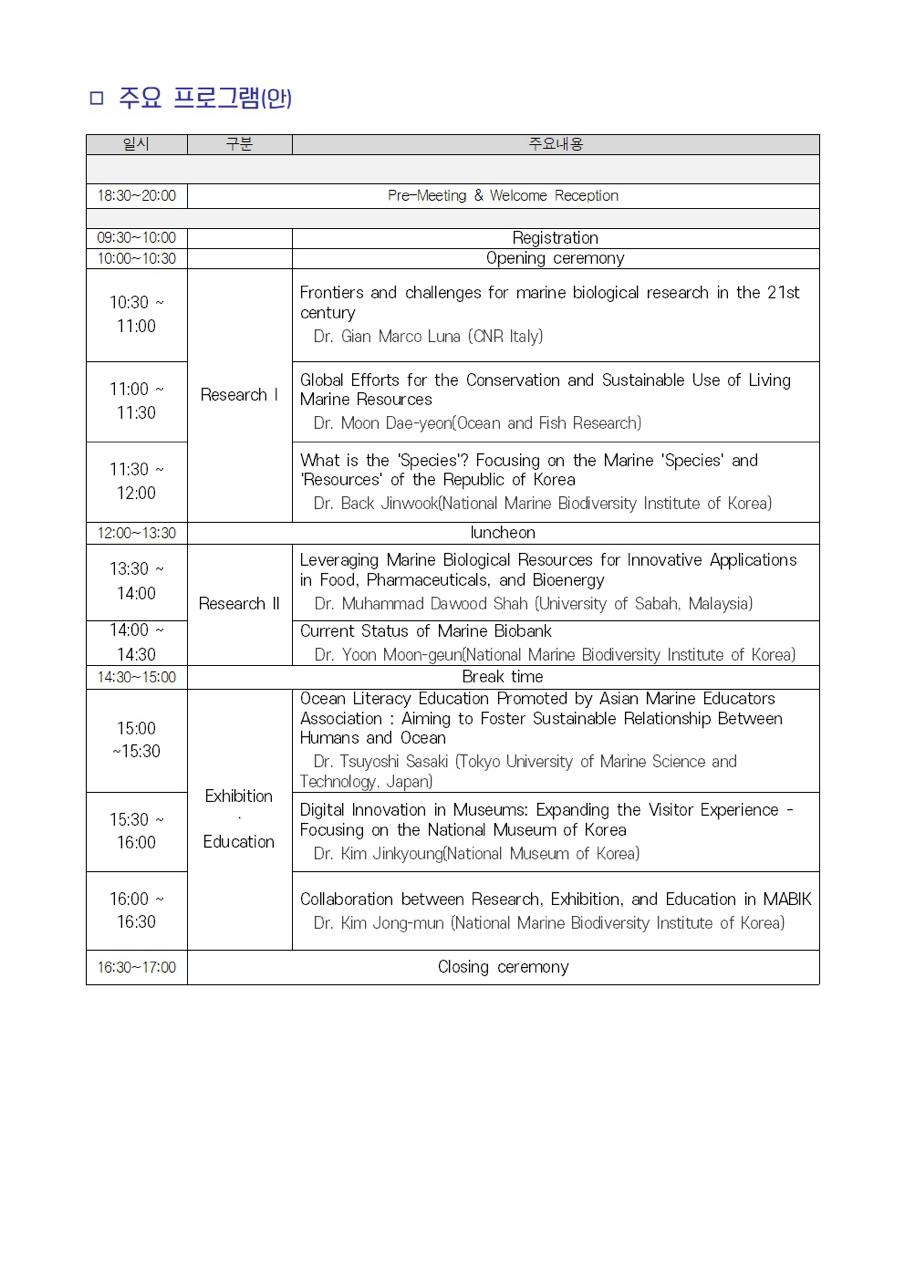
On April 24, 2025, the MABIK International Symposiumwas held in the auditorium of the National Marine Biodiversity Institute of Korea (MABIK) and in the exhibition space called SeaQrium. It was attended by the director of CNR IRBIM Gian Marco Luna with the presentation entitled “Frontiers and challenges for marine biological research in the 21st century“. MABIK is the Korean Institute dedicated to research on Marine Biodiversity. Directed by Kim Hyun-tae, the Mabik aims to contribute to the conservation of marine biological resources and the development of the marine fishing industry through the collection, conservation, exhibition and systematic research of biological resources. Since its opening in 2015, MABIK has achieved significant results in the field of Korean marine biodiversity: it has acquired about 10,000 marine species and a collection of over 600,000 specimens; this allows it to manage a considerable part of the country’s marine biodiversity, precisely 63% of the marine species officially registered in Korea. He also developed the Marine Biodiversity Information System (MBRIS), through which he contributed to the standardization and global sharing of marine biological data. Finally, it led to practical applications, such as the development of commercialised products in the areas of cosmetics and treatments for metabolic diseases, carried out in collaboration with private companies. On this page you can consult the program of the symposium.
Annual Conference of the Department of Earth System Sciences and Technologies for the Environment
The Conference of the Department of Earth System Science and Technologies for the Environment (DSSTTA) will take place on 29 and 30 May 2025, in Ancona, at the Mole Vanvitelliana
The conference will address the challenges and opportunities that research will have to face and seize, also in the face of the changes that are happening at European and international level. It will be an opportunity to discuss and reflect on the future of the strategic areas of the DSSTTA, as well as on the paths and initiatives that can contribute to giving science a fundamental role in the renewed political, social and economic context. In those days it will be possible to visit the CNR Research Ship “Gaia Blu“.
The conference program and how to participate and register are available on the dedicated page.
“Linea Verde” in Ancona
The episode of Linea Verde Italia made a stop in the Marche region, and in particular in the lively city of Ancona. Researchers from CNR-IRBIM and the Polytechnic University of Marche were also involved in the discovery of the wonders and activities of the area.
The shots at sea were led by colleagues who illustrated some activities carried out within the NBFC – National Biodiversity Future Centre , the research center dedicated to the in-depth study of marine biodiversity and the development of innovative strategies for its preservation, a crucial issue for the health of our planet. Here is the link to watch the episode again
The disappearance of Gianna Fabi
With deep sorrow, the Institute for Biological Resources and Marine Biotechnology (CNR-IRBIM) announces the death of Gianna Fabi who has dedicated over 40 years of his career to marine research. In the words of the director: “Gianna was an esteemed colleague and a passionate researcher, whose scientific contribution has enriched not only our Institute, with particular reference to Ancona, but also the wider marine scientific community. She has always participated with dedication in the Working Group on Artificial Reefs; she has also contributed as an expert to prestigious working groups such as GFCM, CITES, EFARO and STECF and has built and conducted dozens and dozens of research projects”. Her death leaves a deep void in the scientific community, which will miss her strongly.
IRBIM and YACademy Collaboration
The collaboration between CNR-IRBIM and YAC- Young Architects Competitions continues successfully. Following the support for the competition “Iron Island” to write the future of ancient oil platforms, the Advanced Training Course “Concept Design for Architecture” will be held in 2025 to encourage research in design by providing concrete themes and generating solutions for modern challenges. The course includes participation as lecturers by colleagues Gian Marco Luna and Pierluigi Penna from IRBIM in Ancona for the module “Climate Change and Environmental Challenges – Habitats in the Post-Anthropocene”. The goal is to offer a structured criterion with content from various disciplines to stimulate creativity and guide designers in generating original and successful architectural ideas with an innovative approach. As sea professionals, the colleagues will illustrate the changes in marine space caused by human interaction and the scientific questions that require, for example, the creation of low-impact infrastructures. Climate change entails increasingly pressing challenges that require innovative and sustainable solutions to mitigate the effects of global warming and build a more sustainable future, even for marine ecosystems. All these challenges must be addressed with multi-disciplinarity and the meeting of professionals from different sectors. For information and dissemination of the initiative, it is possible to consult the Yacademy website. It is possible to watch presentation videos of the past competition Iron Island; and the official presentation video of the course “Concept Design for Architecture”.