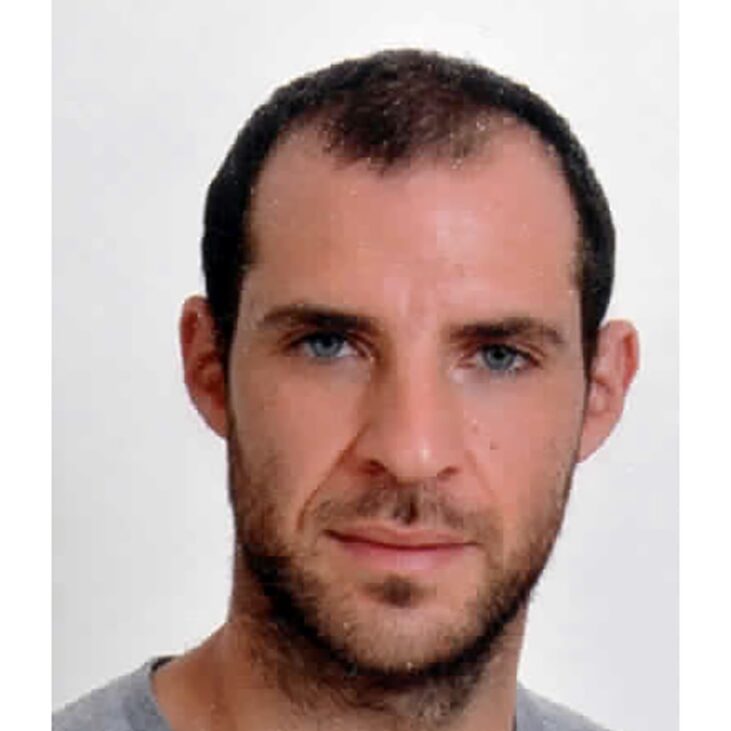
Federico Calì is a Postdoctoral Research Fellow at the Institute for Marine Biological Resources and Biotechnology of the National Research Council (CNR-IRBIM) in Ancona, Italy.
He obtained his Bachelor’s degree in Biological Sciences from the University of Palermo and his Master’s degree in Marine Biology from the University of Padua. In 2024, he earned his PhD in Ecological Sciences (FishMed-PhD program) from the University of Bologna, in collaboration with the CNR.
Since 2015, he has been working at CNR-IRBIM (formerly ISMAR) of Ancona, focusing on biological sampling and data analysis within the CAMPBIOL module of the National Data Collection Framework (DCF) for fisheries. From 2015 to 2024, he carried out monitoring and sampling activities in the fishing fleet of Chioggia, on board commercial fishing vessels, at landing sites, and at the wholesale fish market, on behalf of CNR-IRBIM Ancona and in close collaboration with the Hydrobiological Station of Chioggia (University of Padua).
His primary research interests focus on the life history traits of various Mediterranean and Antarctic fish species, with particular emphasis on reproductive traits, growth in juvenile and adult stages, and larval ecology. He possesses advanced expertise in field and laboratory sampling techniques, specifically in sample preparation for microscopic analysis of biological structures (gonad histology, stomach content analysis, and age estimation via otolith reading), complemented by skills in ecological modeling approaches.
During his PhD, he investigated the biological responses of gadiform species to fishing pressure and climate change, and he continues to conduct research on the effects of global warming on fish species and communities. He has participated in more than 20 oceanographic and scientific trawl surveys in the Mediterranean Sea and was a team member of the 38th Italian Antarctic Expedition. Furthermore, he has completed research stays abroad at the Instituto Español de Oceanografía (IEO) in Palma de Mallorca and at DTU Aqua in Lyngby (Denmark). He is the author and co-author of several scientific publications in international peer-reviewed journals and numerous technical reports.
From 2018 to 2023, he also carried out teaching and academic support activities at the University of Padua within courses related to fisheries biology. During the same period, he collaborated in the management and outreach activities of the “Giuseppe Olivi” Museum of Adriatic Zoology in Chioggia.
Supporting political and operational decisions in the fisheries sector in order to contribute to the protection of marine ecosystems and the economic well-being of the communities involved
The research activities of the Institute are carried out in the context of research, development and innovation projects, both national and international, based on regional funding programs (POR FEAMPA - Regional Operational Program of the European Maritime Affairs Fisheries Fund and Aquaculture and POR FESR - Regional Operational Program of the European Regional Development Fund) or ministerial (PRIN - Projects of relevant national interest, PNRA - National Research Program in Antarctica, PO FEAMPA - National Operational Program European Maritime Affairs Fisheries and Aquaculture Fund) , programs for European Territorial Cooperation (Interreg), direct funding programs of the European Commission (Horizon2020 and Horizon Europe, Life, JPI - Joint Programming Initiatives, ERA-NET Cofund) and thematic collaboration initiatives managed by international organizations such as, for example , the FAO - GFCM (General Fisheries Commission for the Mediterranean). The Institute also develops funded projects in the context of collaborations with private companies in the sectors of the blue economy as well as technology transfer and research results. Research projects, mainly of a collaborative nature, are developed through a wide network of partners that include major Italian and foreign research institutions and universities.