
Fernando Rubino
Senior Researcher
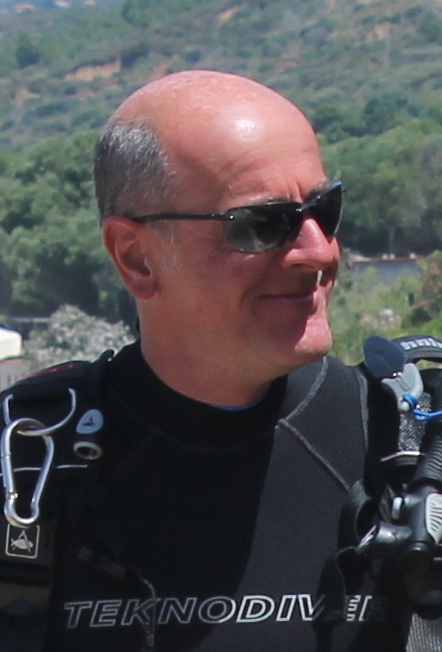
Graduated in Biological Sciences from the University of the Salento, he began collaborating with the former Istituto Talassografico of the CNR in Taranto on marine research campaigns and participating in several INTERREG Projects. In 2001, he became a Researcher at the CNR in Taranto and is currently a Senior Researcher (Primo Ricercatore) at CNR-IRBIM in Taranto.
He has participated in numerous national and international research projects as well as oceanographic campaigns and has authored many scientific papers in ISI journals, as well as two outreach scientific volumes on the Marine Biology Station of Porto Cesareo (LE). He also serves on the Editorial Board of international scientific journals in the field of marine ecology.
His primary research areas focus on: Plankton Ecology, studying resting stages in marine sediments and their role in community dynamics; Conservation & Biodiversity, focusing on protected species such as the bivalves Pinna nobilis and Pinna rudis, coordinating research surveys in the Mediterranean; Non-Indigenous Species, investigating non-native species in environments like the Mar Piccolo of Taranto, a Long-Term Ecological Research (LTER) site, where he serves as deputy head. He is part of the CNR Underwater Scientific Operators group and holds FIPSAS/CMAS 3rd Degree Scuba Diver, Basic Nitrox, and Rescue certifications.
Since 2019, he has been a member of the Board of Directors of the “Ammiraglio Michelagnoli” non-profit Foundation in Taranto, where he also chairs the Scientific Council. As of 2026, he serves as the “Environment and Landscape” delegate for the Taranto Provincial Delegation of the FAI (Fondo per l’Ambiente Italiano).Laureato in Scienze Biologiche presso l’Università del Salento, ha iniziato a collaborare con l’allora Istituto Talassografico del CNR di Taranto in campagne di ricerca in mare e partecipando a diversi Progetti INTERREG. Nel 2001 è diventato Ricercatore presso il CNR di Taranto e ora è Primo Ricercatore presso Il CNR-IRBIM di Taranto. Ha partecipato a diversi progetti di ricerca nazionali ed internazionali e campagne oceanografiche; è autore di numerosi lavori su riviste scientifiche ISI oltre a due volumi a carattere divulgativo sulla Stazione di Biologia Marina di Porto Cesareo (LE) ed è membro dell’Editorial Board di riviste scientifiche internazionali nel campo dell’ecologia marina. Le sue principali aree di ricerca riguardano: l’ecologia del plancton con lo studio degli stadi di resistenza nei sedimenti marini e il loro ruolo nella dinamica delle comunità; tematiche di conservazione e biodiversità con focus su specie protette come i bivalvi Pinna nobilis e Pinna rudis, coordinando diverse campagne di ricerca in Mediterraneo; lo studio di specie non indigene in ambienti come il Mar Piccolo di Taranto, sito della rete LTER (Long Time Ecological Research) e di cui è responsabile vicario. Fa parte del gruppo degli Operatori Scientifici Subacquei del CNR e possiede i brevetti 3° grado AR, Nitrox base e Salvamento FIPSAS/CMAS. Dal 2019 fa parte del Consiglio Direttivo della Fondazione onlus “Ammiraglio Michelagnoli” di Taranto di cui è anche Presidente del Consiglio Scientifico e dal 2026 è delegato “Ambiente e Paesaggio” della Delegazione Provinciale del FAI (Fondo per l’Ambiente Italiano) di Taranto.
Institute
Taranto